Case Study:
Modernizing Aircraft Exterior Damage Inspection Through Mixed Reality
Case Study:
Modernizing Aircraft Exterior Damage Inspection Through Mixed Reality
Overview
Our team collaborated with an MRO organization to redesign the workflow for exterior aircraft damage inspection. The goal was to replace a slow, paperbased process with a more reliable and efficient digital approach. Using Mixed Reality, computer vision, and a multiplatform software architecture, we created a system that supports engineers in capturing damage quickly and consistently, while meeting aviation industry compliance expectations.
This project reflects our experience in building operational software for aviation environments and highlights the type of digital transformation work we can support for airlines.

Industry Context
Exterior damage inspections are routine, but the process used by most operators has changed little in decades. Engineers typically rely on:


This approach works, but it can be slow, inconsistent, and difficult to audit—especially during timecritical events such as AOG situations.
Many airlines and MROs are now exploring ways to streamline inspection workflows, improve data reliability, and reduce turnaround times without compromising safety.
Project Challenges
1. MultiClient Architecture
The system needed to operate across smartglasses, desktop, and web interfaces. Designing a shared data model and synchronization logic that performed reliably—even on resourcelimited MR devices—was a central technical requirement.

2. 3D Spatial Localization
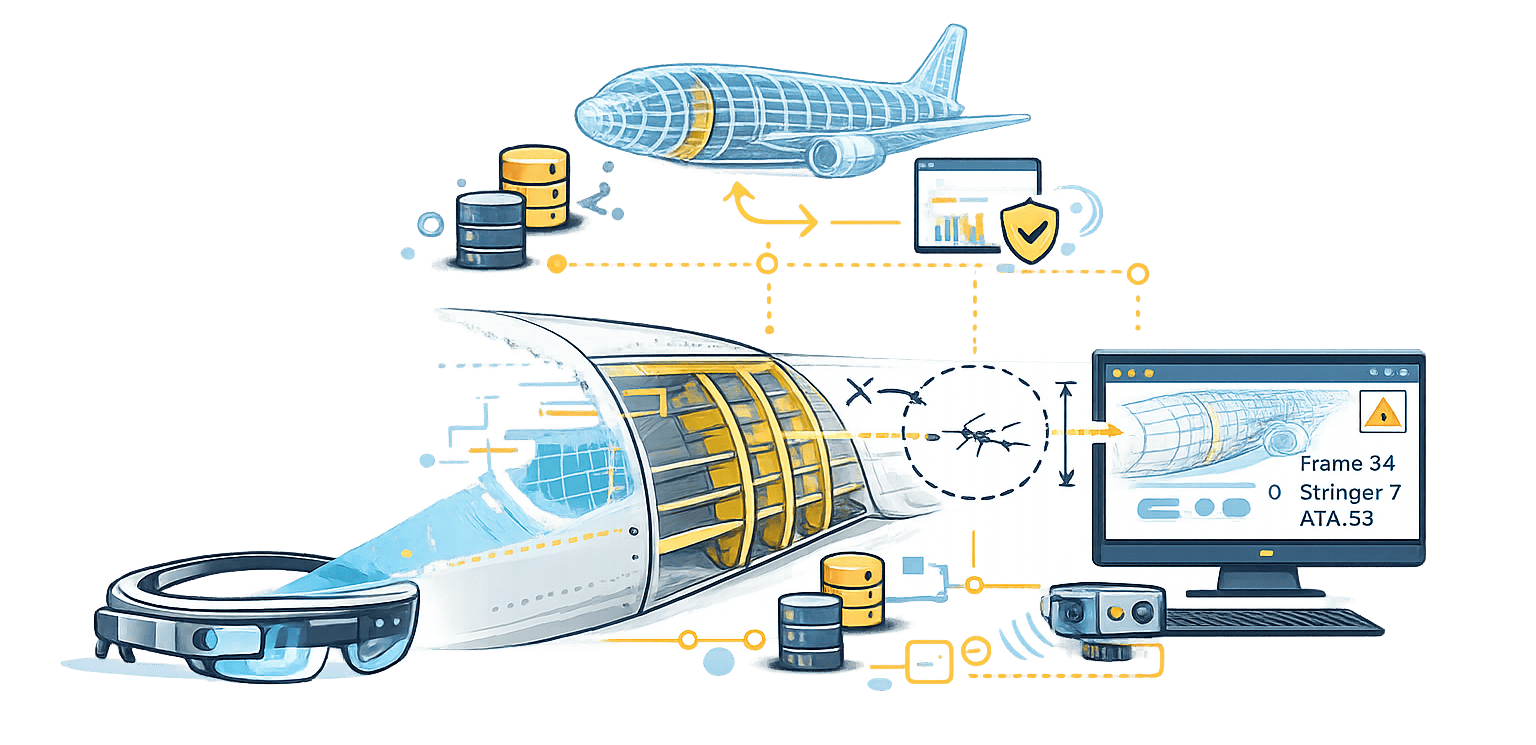
Accurate mapping of aircraft structures (frames, stringers, ribs) and automated damage localization required a combination of computer vision, 3D modelling, and sensorfusion techniques.
3. Compliance and Traceability
Because inspection results become part of formal maintenance records, the solution had to ensure consistent documentation, data integrity, and full traceability.

4. Adaptability to Operational Environments
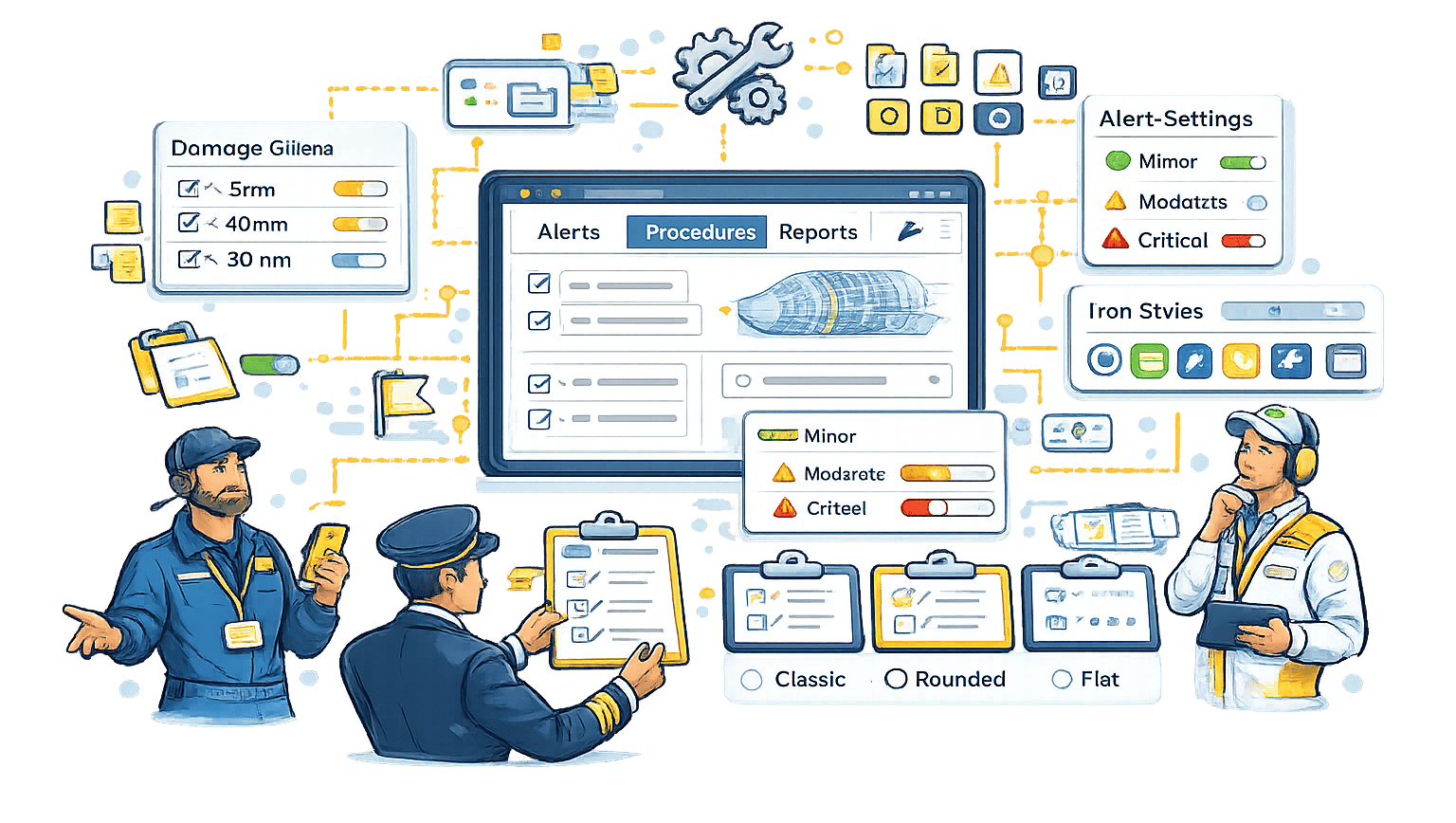
Different operators interpret procedures and maintenance standards in slightly different ways. The system needed configuration options to support this variety.
Solution Approach
Mixed Reality-Based Inspection
Engineers can see structural references and previously recorded data overlaid directly on the aircraft fuselage. New damage is captured quickly, with automatic localization based on 3D geometry.
Unified Data Platform
Inspection data—including text notes, measurements, photos, and videos—is stored in a central system accessible through smartglasses, desktop, and web tools.
Automated Localization
Using computer vision and 3D models, the system identifies damage location down to frame, stringer, and ATA-reference levels.
Support for TimeCritical Decisions
Faster, more structured data entry helps maintenance teams reach “fly / nofly” decisions more confidently during short turnaround windows.
Measured Impact
In a 10-bay narrowbody MRO environment, the solution provided:

What This Demonstrates
This project illustrates our capability to:

Relevance for Airlines
Airlines exploring similar initiatives may find value in the following areas:
- More consistent inspections across the fleet
- Improved data quality and auditability
- Reduced inspection duration and turnaround bottlenecks
- Faster resolution during AOG events
- Better utilization of maintenance personnel and hangar capacity
While each organization has its own procedures and constraints, the experience gained through this project provides a solid foundation for supporting similar digital transformation efforts within airline maintenance operations.